
© czechia2026.com
У жовтні Чехія стала почесною гостею Франкфуртського книжкового ярмарку — однієї з найбільших книжкових подій світу. Під гаслом Czechia: A Country on the Coast («Чехія: країна на узбережжі») вона представила 75 авторів і авторок, понад 40 видавництв і більш як 100 літературних та культурних заходів. До відкриття ярмарку в межах підготовки програми німецькою мовою вийшло 193 переклади чеських книжок. Серед них — романи про історичну пам’ять, автобіографічні комікси, твори про жіночий досвід і гендерну ідентичність, філософська проза та дитяча література.
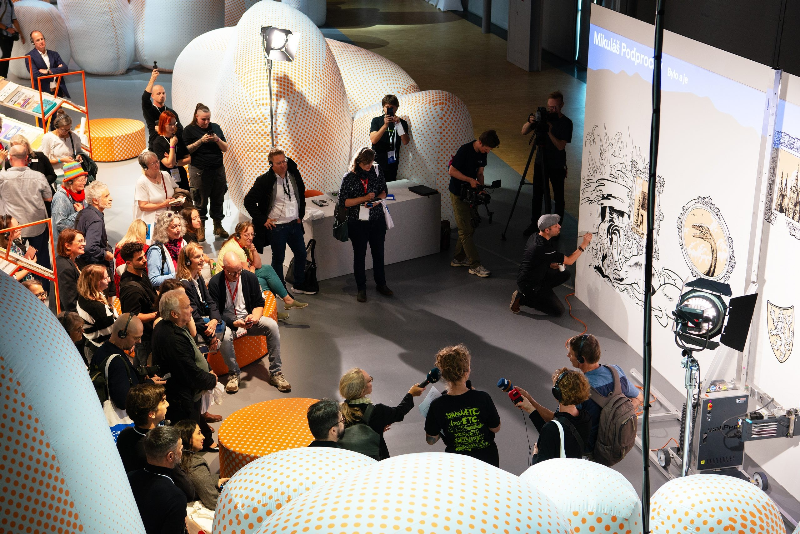
Чеський павільйон у Франкфурті, czechia2026.com
Історія Чехії та її складні взаємини з Німеччиною стали однією з тем програми. У романі Geteiltes Haus («Розділений дім») Аліса Горачкова розповідає про долю судетської родини на тлі нацистської окупації та повоєнного вигнання німців. Радка Денемаркова в книжці Schokoladenblut («Шоколадна кров») звертається до XIX століття й поєднує історії чеської письменниці Божени Нємцової та французької авторки Жорж Санд. Через їхні долі вона порушує питання жіночої свободи, творчості, націоналізму та влади. Обидва романи рекомендував німецький культурний мовник MDR у своєму огляді чеської літератури до ярмарку.
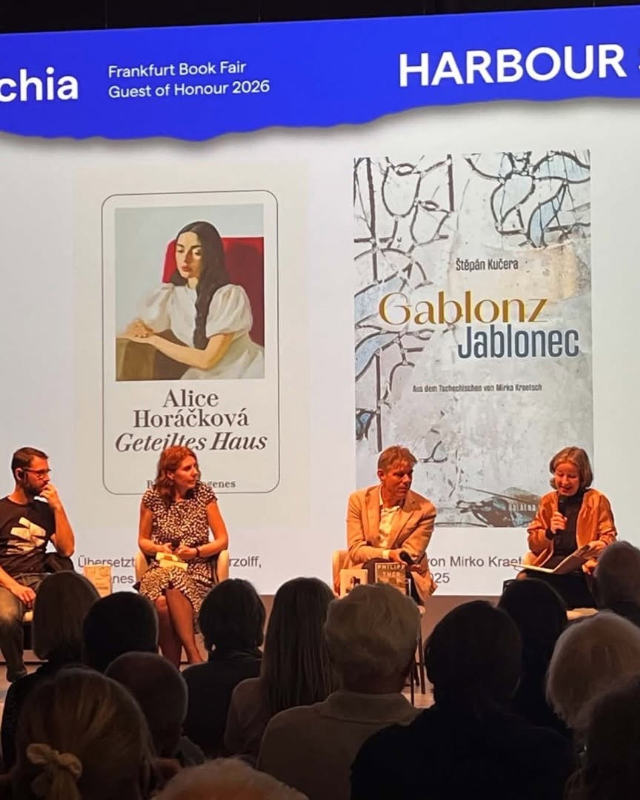
Презентація перекладу книги Аліси Горачкової "Розділений дім", Alice Horackova
Сучасна чеська література говорить і про досвід, який часто залишається поза великими історичними оповідями. В автобіографічному коміксі Heartcore Штепанка Їслова досліджує любов, близькість і повторювані сценарії стосунків. Графічний роман Ohne Haare («Без волосся»), створений Терезою Драгоньовською та Їсловою, розповідає про життя з алопецією та прийняття власного тіла. А в книжці Ich war wütend auf die ganze Welt («Я гнівався на весь світ») Патрик Банга осмислює досвід ромської спільноти в Чехії, расизм і поліцейське насильство. Ці твори перетворюють особисті історії на розмову про упередження, нерівність і право бути почутим.
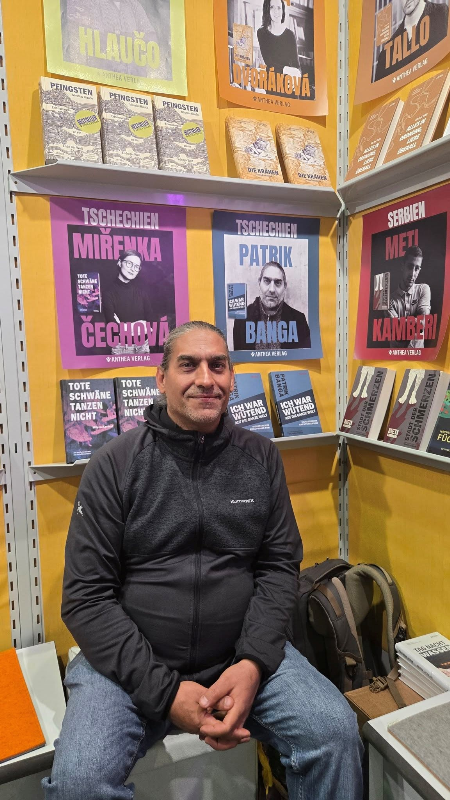
Патрік Банга, письменник
Франкфуртська програма показала чеську літературу значно ширшою за канон, представлений іменами Мілана Кундери та Ярослава Гашека. Її автори повертаються до суперечливого минулого, говорять про досвід меншин, жіночу свободу й особистий вибір, експериментують із формою та жанрами. Водночас 193 переклади — це лише початок: справжнім результатом стане те, чи зацікавлять ці книжки німецьких читачів надовго, чи з’являться нові перекладацькі й видавничі проєкти після завершення ярмарку.
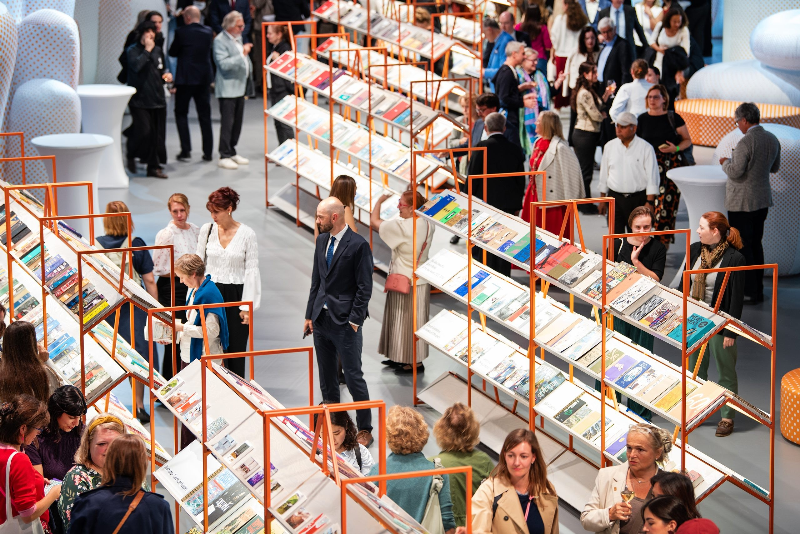
czechia2026.com
From Family Sagas to Graphic Novels: What Czechia Showcased in Frankfurt
In October, Czechia took centre stage as Guest of Honour at the Frankfurt Book Fair, one of the world’s leading publishing events. Under the motto Czechia: A Country on the Coast, it presented 75 authors, more than 40 publishers and over 100 literary and cultural events. As part of the preparations for the fair, 193 Czech books had been published in German translation. The selection ranged from novels exploring historical memory to autobiographical comics, works about women’s experiences and gender identity, philosophical fiction and children’s literature.
Czech history and the country’s complex relationship with Germany were among the programme’s central themes. In Geteiltes Haus (A Divided House), Alice Horáčková traces the fate of a family in the Sudetenland against the backdrop of political upheaval and war in the first half of the twentieth century. Radka Denemarková’s Schokoladenblut (Chocolate Blood) reaches back to the nineteenth century, bringing together the lives of Czech writer Božena Němcová and French author George Sand. Through their stories, Denemarková explores women’s freedom, creativity, nationalism and power. Both novels were recommended by German public broadcaster MDR in its overview of Czech literature ahead of the fair.
Contemporary Czech literature also gives voice to experiences often left out of grand historical narratives. In her autobiographical graphic novel Heartcore, Štěpánka Jislová explores love, intimacy and recurring patterns in relationships. Ohne Haare (Without Hair), a graphic novel by Tereza Drahoňovská and Jislová, tells the story of living with alopecia and learning to accept one’s body. In Ich war wütend auf die ganze Welt (I Was Angry at the Whole World), Patrik Banga reflects on the experience of the Roma community in Czechia, addressing racism and police violence. These works turn individual stories into a broader conversation about prejudice, inequality and the right to be heard.
The Frankfurt programme also showcased literature that challenges conventional genre boundaries. In Michal Ajvaz’s Passagen unter Glas (Passages Under Glass), an ordinary scene in Leipzig opens into a mysterious narrative that unsettles our perception of reality. Marita Kelbl’s Weder Junge noch Mädchen (Neither Boy nor Girl) addresses gender identity in children’s and young adult literature. Alongside contemporary writing, German-speaking readers were introduced to classics such as Babička (The Grandmother) by Božena Němcová, as well as crime fiction, science fiction and graphic narratives.
The Frankfurt programme presented Czech literature as far more diverse than the canon associated with Milan Kundera and Jaroslav Hašek. Its writers revisit a contested past, explore the experiences of minorities, examine women’s freedom and personal choice, and experiment with form and genre. Yet the 193 translations are only a beginning. The lasting impact of the fair will depend on whether these books continue to attract German-speaking readers and lead to further translation and publishing projects after the event has ended.
169