© Facebook World Marathon Live
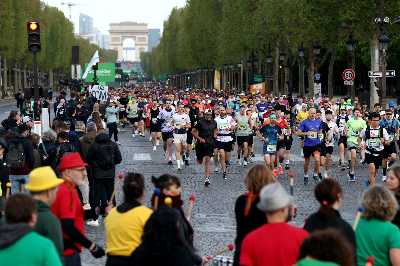
12 квітня Париж знову став містом великого бігу. Щорічний марафон, один із наймасштабніших у світі, зібрав цього року майже 60 тисяч учасників із понад 120 країн. Уздовж маршруту — від Єлисейських полів до авеню Фош — за подією спостерігали сотні тисяч глядачів. Траса залишилася класичною: 42 кілометри і 195 метрів через головні символи французької столиці — Лувр, Нотр-Дам, набережні Сени, а також Венсенський і Булонський ліси. Водночас організатори наголосили на нових пріоритетах: цьогоріч марафон вперше максимально відмовився від одноразового пластику, підкреслюючи екологічний вимір події. За офіційними даними, майже половина учасників долали марафонську дистанцію вперше, а частка жінок сягнула рекордних показників. Це вкотре підтверджує зміну самого характеру події — від змагання елітних спортсменів до масового досвіду, де особиста історія часто важить більше за фінішний час. Саме такі історії цього року стали центральними.
Окрему увагу привернула команда з України. У марафоні взяли участь ветерани війни та цивільні, частина з яких долала дистанцію на інвалідних візках. Особливістю стало те, що ці візки були виготовлені самими учасниками під час реабілітації у Львові. Вони не прагнули швидкості. Команда рухалася разом, підлаштовуючись під темп найповільнішого, фактично перетворивши марафон на спільний шлях, а не на індивідуальне змагання. Для багатьох із них ці 42 кілометри стали не спортивним викликом, а етапом повернення до життя. Як зазначає франкомовне видання Ukrinform France, участь української команди має на меті «привернути увагу міжнародної спільноти до потреби підтримки України та реабілітації поранених», а сама ініціатива поєднує «допомогу, інновації та українську стійкість». Паризький марафон давно вийшов за межі суто спортивної події. У 2026 році він знову показав, що його головна цінність — не рекорди, а люди. Іноді саме ті, хто фінішує останніми, залишають найсильніший слід.
Ukrainian participants became a defining symbol of the 2026 Paris Marathon
On 12 April, Paris once again turned into a city of running. The annual marathon — one of the largest in the world — brought together nearly 60,000 participants from more than 120 countries. Hundreds of thousands of spectators lined the route, stretching from the Champs-Élysées to Avenue Foch. The course remained unchanged: 42.195 kilometres through the capital’s most iconic landmarks, including the Louvre, Notre-Dame, the banks of the Seine, as well as the Bois de Vincennes and Bois de Boulogne. At the same time, organisers highlighted new priorities: this year’s race marked a significant step towards eliminating single-use plastics, underscoring its environmental ambition. According to official figures, nearly half of the runners were taking on the marathon distance for the first time, while the proportion of women reached a record level. This reflects a broader shift in the nature of the event — from an elite competition to a mass participation experience, where personal stories often matter more than finishing times. It was precisely these stories that defined this year’s race. Particular attention was drawn to a team from Ukraine. The group included war veterans and civilians, some of whom completed the distance in wheelchairs. What made their participation especially striking was that these wheelchairs had been handcrafted by the participants themselves during rehabilitation in Lviv.
They were not chasing speed. Moving together and adjusting to the pace of the slowest member, the team effectively transformed the marathon into a collective journey rather than an individual contest. For many, the 42 kilometres were not a sporting challenge, but a step towards rebuilding their lives. As noted by Ukrinform France, the initiative aimed “to draw international attention to the need to support Ukraine and to address the rehabilitation of the wounded”, bringing together “aid, innovation and Ukrainian resilience”. The Paris Marathon has long outgrown its purely sporting identity. In 2026, it once again demonstrated that its true significance lies not in records, but in people. Sometimes, those who finish last leave the most enduring impression.
2204