Зальцбурзький фестиваль 2026: коментують оглядачі провідних видань

12.08.2026
© Salzburger Festspiele

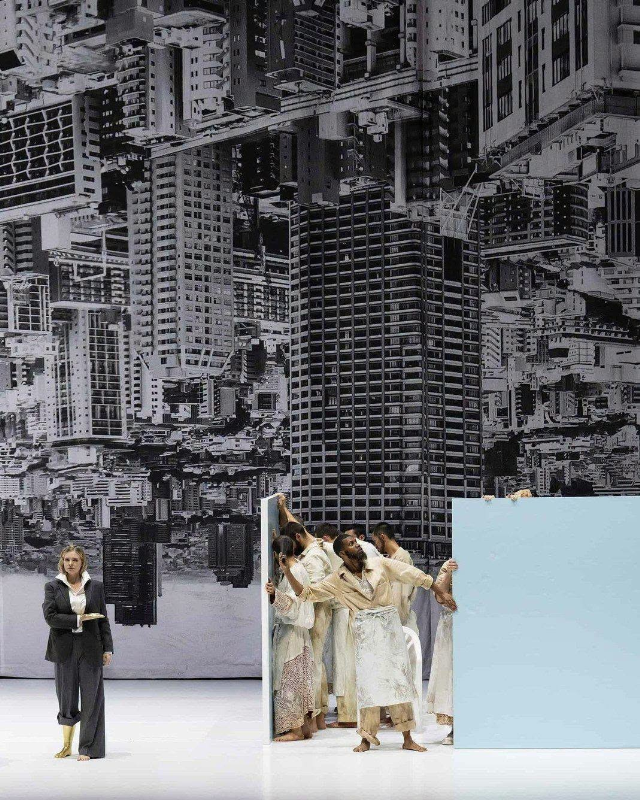
Зальцбурзький фестиваль цього року виявився особливо контрастним: поряд із беззаперечними мистецькими успіхами критики побачили постановки, в яких режисерська концепція подекуди відсувала на другий план сам твір. Однією з головних подій став «Святий Франциск Ассизький» (Saint François d’Assise; Франція) Олів’є Мессіана у постановці Ромео Кастеллуччі. 
«Святий Франциск Ассизький», Salzburger Festspiele 

Луїс Ґаґо в El País назвав музику Мессіана та сценічне рішення Кастеллуччі «великим спадком» цьогорічного фестивалю. Оглядачка BR-KLASSIK Мерет Форстер описала постановку як «монументальну містику» й особливо відзначила її сильні образи — від випікання хліба та живих тварин до моторошного дощу з несправжніх мертвих птахів. Її висновок лаконічний: зрештою саме музика «рухає і зворушує». Financial Times запропонував значно стриманішу оцінку: видання назвало виставу «випробуванням на витривалість», зауваживши, що з антрактами вона триває близько шести годин і п’ятнадцяти хвилин, а величезний масштаб не завжди переходить у переконливе музичне переживання. 
"Подорож до Реймса», Salzburger Festspiele 

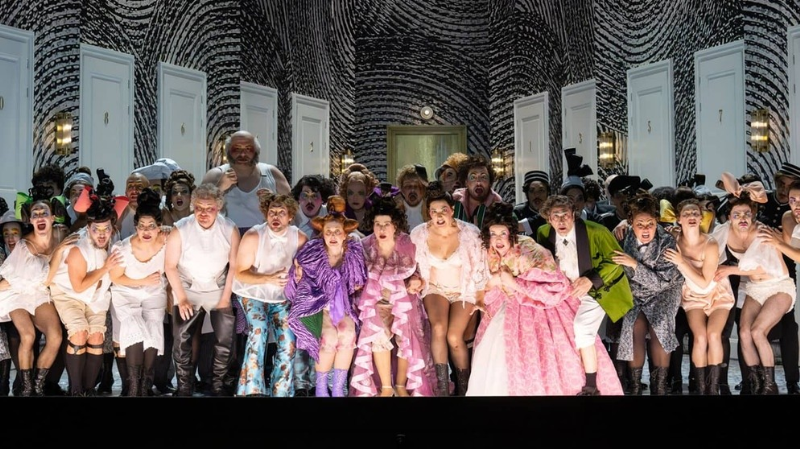
Не менш полярною виявилася реакція на інші прем’єри. «Подорож до Реймса» (Il viaggio a Reims; Італія) Джоаккіно Россіні в постановці Баррі Коскі Бернгард Нойгофф із BR-KLASSIK назвав «кількома годинами першокласної втечі від реальності»: критик хвалив темп, ансамбль, комедійну точність і безперервну сценічну енергію. Луїс Ґаґо в El País був значно суворішим, побачивши у виставі передусім шоу, сконструйоване навколо Чечілії Бартолі.
«Аріадну на Наксоccі", Salzburger Festspiele 

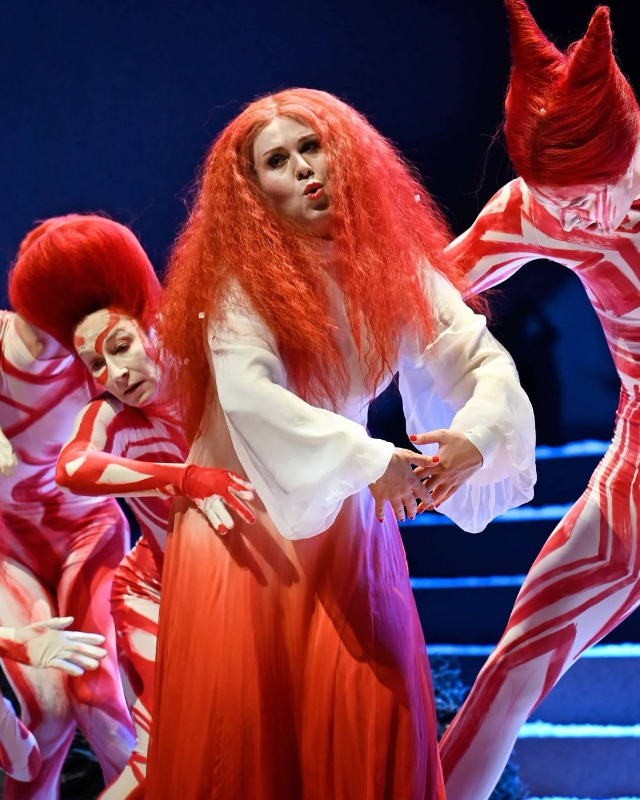
Ще різкіше він оцінив «Аріадну на Наксоссі» (Ariadne auf Naxos; Німеччина / Австрія) Ріхарда Штрауса у постановці Ерсана Мондтаґа, назвавши її постановкою, яку легко забути. Йоганн Ян у BR-KLASSIK охарактеризував музично-сценічний результат як «Аріадну із затягнутим ручником», тоді як Елеонора Бюнінґ у Salzburger Nachrichten вважала, що «феєрверк видовищних зовнішніх ефектів» не замінив притаманних твору витонченості та іронії.  На цьому тлі «Фауст I» (Faust I; Німеччина) Йоганна Вольфґанґа фон Ґете у постановці Ульріха Раше отримав серйознішу критичну рецепцію: Еґберт Толль у Süddeutsche Zeitung назвав виставу «суворим психологічним концентратом», хоча й додав, що режисер не до кінця послідовно розвинув власну ідею.
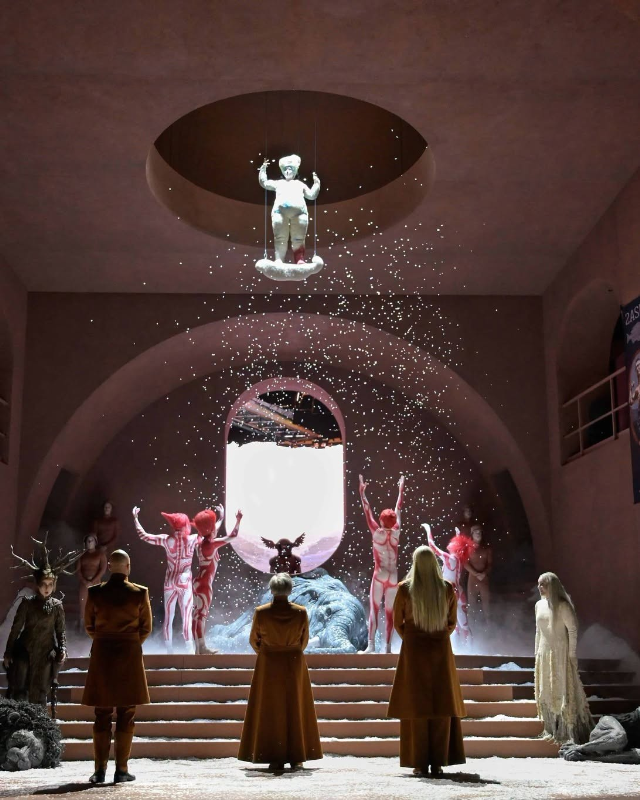
«Аріадну на Наксоccі", Salzburger Festspiele 

Окремою темою стала присутність штучного інтелекту в «Аріадні на Наксосі» (Ariadne auf Naxos; Німеччина / Австрія). Мондтаґ переносить дію на Марс, а у великому сценічному ілюмінаторі з’являються космічні кораблі, марсіанські пейзажі та фантастичні небесні світи; офіційна програма фестивалю підтверджує авторство відеоряду Александера Панньє. Андреас Клеуі в Nachtkritik зауважив, що відео радше «дублює афекти», ніж вступає з музикою і драматургією в продуктивну напругу. Водночас саме Міхаель Атцінґер в Orpheus Magazin прямо згадує використання ШІ: іронічно зауважує, що «ШІ робить усе, що може», але самих барвистих образів замало, завершуючи метафорою про «подорож на Марс економкласом». Таким чином, дискусія вийшла за межі однієї постановки: питання полягає вже не в тому, чи доречний ШІ на оперній сцені як такий, а в тому, чи здатна технологія стати самостійною частиною режисерського мислення, а не лише виробляти видовищне цифрове тло.
Salzburger Festspiele 

Salzburg Festival 2026: leading critics have their say

This year’s Salzburg Festival has proved a study in contrasts: alongside clear artistic triumphs, critics have identified productions in which the director’s concept at times appeared to overshadow the work itself. One of the festival’s major events was Olivier Messiaen’s Saint François d’Assise (France), staged by Romeo Castellucci. Writing in El País, Luis Gago described Messiaen’s music and Castellucci’s staging as one of the festival’s great legacies. BR-KLASSIK critic Meret Forster characterised the production as “monumental mysticism”, singling out its powerful imagery — from bread-making and live animals to the unsettling spectacle of a rain of artificial dead birds. Her conclusion was succinct: ultimately, it is the music that “moves and touches” the audience. The Financial Times was considerably more reserved, calling the production an “endurance test”: including intervals, it runs for around six hours and 15 minutes, and its monumental scale does not always translate into an equally compelling musical experience.

The response to the festival’s other major productions was no less divided. Bernhard Neuhoff of BR-KLASSIK described Gioachino Rossini’s Il viaggio a Reims (Italy), directed by Barrie Kosky, as “several hours of first-rate escapism”, praising its pace, ensemble work, comic precision and relentless theatrical energy. Luis Gago, writing in El País, was far less convinced, seeing it above all as a spectacle constructed around Cecilia Bartoli.

Gago was harsher still on Richard Strauss’s Ariadne auf Naxos (Germany/Austria), staged by Ersan Mondtag, describing it as a production that was all too easy to forget. Johann Jahn of BR-KLASSIK summed up the musical and theatrical result as “Ariadne with the handbrake on”, while Eleonore Büning, writing in Salzburger Nachrichten, argued that a “firework display of spectacular external effects” was no substitute for the work’s characteristic subtlety and irony. Against this backdrop, Ulrich Rasche’s staging of Johann Wolfgang von Goethe’s Faust I (Germany) received a more serious critical response. Egbert Tholl of Süddeutsche Zeitung described the production as a “rigorous psychological concentrate”, while adding that Rasche did not pursue his own radical premise with complete consistency.

The use of artificial intelligence in Ariadne auf Naxos emerged as a separate point of debate. Mondtag relocates the action to Mars, with spacecraft, Martian landscapes and fantastical celestial worlds appearing through a vast stage porthole; the festival’s official programme credits Alexander Pannier with the video design. Andreas Klaeui, writing for Nachtkritik, observed that the projections tended to “duplicate the affects” rather than create a productive tension with the music and dramaturgy. Michael Atzinger in Orpheus Magazin, meanwhile, explicitly addressed the use of AI, dryly remarking that “AI does everything it can” but that an abundance of colourful imagery is not enough, before likening the result to “a trip to Mars in economy class”. The debate therefore extends well beyond this particular production. The question is no longer simply whether AI belongs on the operatic stage, but whether the technology can become an integral part of a director’s artistic language rather than merely a means of generating spectacular digital scenery.

101
Інші матеріали розділуМистецтво:
Байройт у тіні Третього рейху: 150-річчя фестивалю знову загострило суперечку про спадщину Вагнера
2542
In 2026, the Bayreuth Festival marks the 150th anniversary of its founding. Yet the occasion increasingly looks less like an unqualified celebration of musical genius. Alongside discussions of the Festspielhaus’s exceptional acoustics, new productions and
У Лейпцигу представили два невідомі ранні твори Йоганна Себастьяна Баха
3462
Two organ pieces recently confirmed as early compositions by a young Johann Sebastian Bach were presented to the public for the first time in Leipzig. The works, Chaconne in D minor (BWV 1178) and Chaconne in G minor (BWV 1179), were performed on 17 Novem
У Німеччині викрили міжнародну мережу фальсифікаторів, що продавала підробки Пікассо, Рембрандта та Рубенса
2500
German authorities have announced the dismantling of a major art forgery network responsible for selling counterfeit paintings attributed to Pablo Picasso, Rembrandt van Rijn, Peter Paul Rubens, and other masters. The coordinated operation extended across
Ні – опері війни: Берлін відповів путуністці Нетребко протестом
2261
Around 200 Ukrainian and Georgian activists gathered for a protest in front of the historic Gendarmenmarkt square in central Berlin. The demonstration targeted a concert by Russian soprano Anna Netrebko, known for her longstanding ties to the Kremlin, hel
Ревю «Musikantenstadl» у Берліні переосмислює німецьку народну культуру та кидає виклик зростаючому популізму
2103
The RambaZamba Theatre in Berlin has premiered a bold reinvention of Musikantenstadl — a satirical reconstruction of the cult 1980s television variety show once synonymous with an idyllic, provincial image of the German national soul.
Замок Уолта Діснея в реальному житті: Нойшванштайн став об’єктом Світової спадщини ЮНЕСКО
3571
In Germany’s iconic Neuschwanstein Castle in Bavaria was officially inscribed on the UNESCO World Heritage List, recognising its outstanding architectural and cultural value not only for Europe but for the world. Commissioned in the late 19th century by K
Німецький суд не дозволив використовувати для пазлів творіння Леонардо да Вінчі
2894
A court in Stuttgart ruled that German toy and puzzle manufacturer Ravensburger AG does not have the right to sell puzzles featuring Leonardo da Vinci's famous “Vitruvian Man” image without the consent of Italian cultural institutions
У чому секрет популярності Poco allegretto з симфонії Брамса?
4721
Третя симфонія Брамса - це блискуче втілення думки Блейка
Софія Губайдуліна: прощання з великою композиторкою
1556
У віці 93 років у Німеччині померла Софія Губайдуліна
Нільс Фрам відмовився від акаунтів у соціальних мережах
2516
Композитор заявив, що соціальні мережі роблять його заручником.