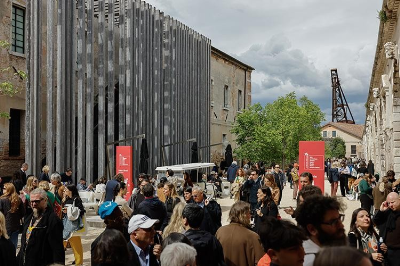
© www.labiennale.org
На 61-й Венеційській бієнале розгорівся один із найгостріших конфліктів у новітній історії інституції. Понад сто художників, представлених у центральній виставці In Minor Keys та в національних павільйонах, пригрозили юридичними діями проти організаторів. Причина — їхні імена, за словами митців, залишилися у процедурі голосування за нові нагороди Visitors’ Lions, попри неодноразові прохання вилучити їх зі списків.
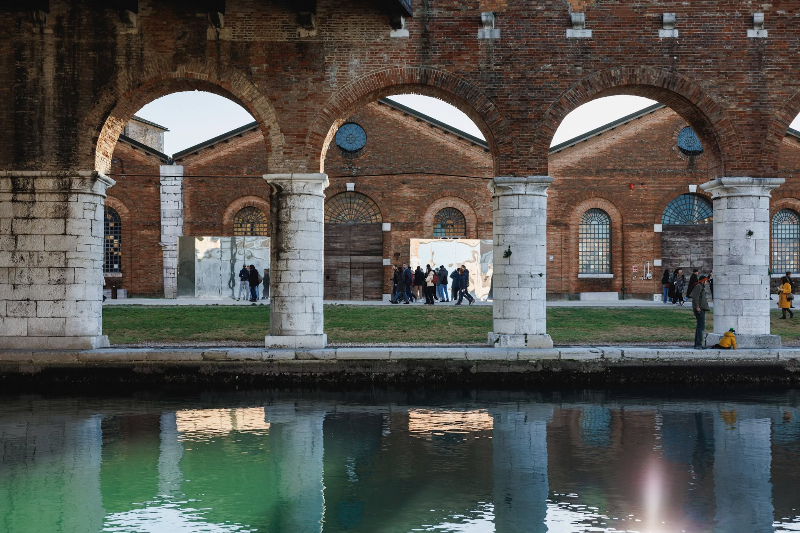
www.labiennale.org
Про це повідомив James Imam у The Art Newspaper. За даними видання, група художників заявила, що така ситуація є неповагою не лише до самих учасників, а й до публіки, якій пропонують голосувати в процедурі, що, на думку підписантів, не має достатньої прозорості та підзвітності. Організатори Бієнале це трактування заперечують: у відповіді вони заявили, що імена залишаються у системі, аби гарантувати відвідувачам свободу висловлення, але голоси за тих митців, які попросили про вилучення, не будуть зараховані.
Конфлікт став продовженням ширшої кризи, що почалася ще до офіційного відкриття виставки. Міжнародне журі, яке мало присуджувати традиційні нагороди, подало у відставку після суперечки навколо участі Росії та Ізраїлю. Раніше журі заявило, що не розглядатиме для нагород роботи з країн, чиї лідери фігурують у провадженнях або ордерах Міжнародного кримінального суду у зв’язку з війнами в Україні та Газі. У практичному вимірі це рішення стосувалося саме Росії та Ізраїлю.
Венеційська бієнале й раніше була ареною політичних протестів, але нинішня ситуація поєднала одразу кілька рівнів кризи: відставку всього журі, заміну традиційної експертної процедури голосуванням публіки, масову відмову художників від участі в нагородах і юридичний спір щодо права інституції залишати імена учасників у системі голосування.
Подібні політичні кризи в історії Бієнале траплялися, однак не в такій конфігурації. У 1968 році Венеція стала сценою студентських протестів проти елітарності та комерціалізації мистецької системи. У 1974 році Бієнале фактично перетворилася на політичну платформу солідарності з Чилі після перевороту Аугусто Піночета. У 1977 році виставка, відома як Biennale of Dissent, була присвячена культурному інакодумству в радянському блоці. Після початку повномасштабного вторгнення Росії в Україну російський павільйон не працював у 2022 та 2024 роках, а його повернення у 2026-му стало одним із головних подразників цьогорічної Бієнале. У 2024 році ізраїльський павільйон також опинився в центрі політичної кризи: художниця Ruth Patir і куратори відмовилися відкривати виставку до досягнення угоди про припинення вогню в Газі та звільнення заручників.La Biennale di Venezia.
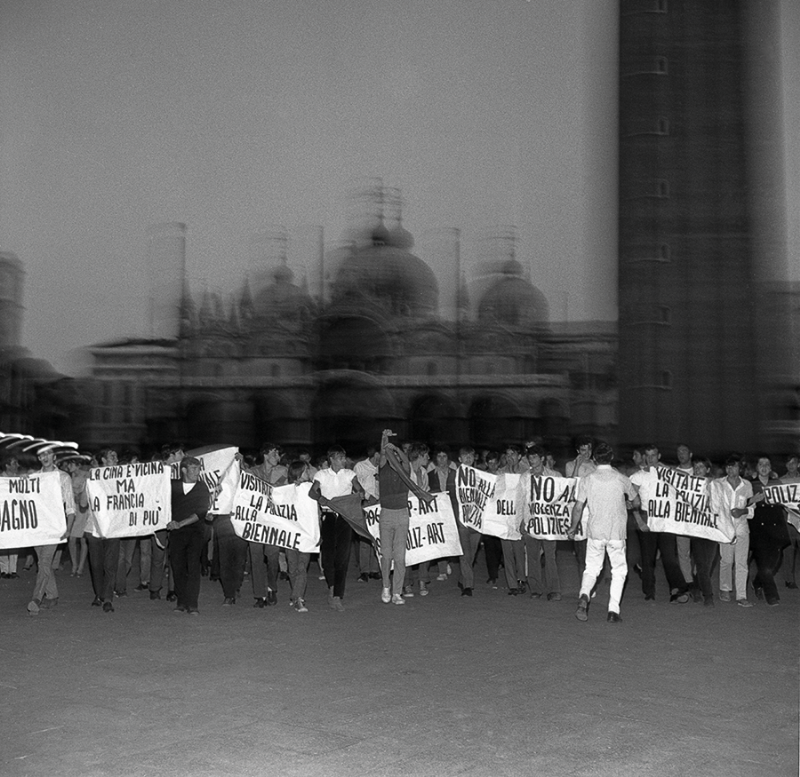
Студенти-демонстранти протестують на площі Святого Марка, 1968.
Photograph: Archivio Cameraphoto Epoche/Getty Images
Європейські культурні оглядачі розглядають нинішній конфлікт як симптом старої структурної проблеми Венеційської бієнале — її залежності від системи національних павільйонів. Британський автор Matthew Holman у Frieze нагадує, що у Венеції твори мистецтва рідко сприймалися окремо від держав, які їх представляють. На його думку, саме павільйонна система робить Бієнале особливо вразливою до воєн, криз легітимності та дипломатичних конфліктів.
Французька оглядачка Roxana Azimi у Le Monde описує цьогорічну Бієнале через призму “павільйонів-парій” — Росії, Ізраїлю та США. Вона звертає увагу на те, що учасники цих павільйонів намагаються дистанціюватися від державної політики, але сама структура національного представництва постійно повертає їх у політичний контекст.
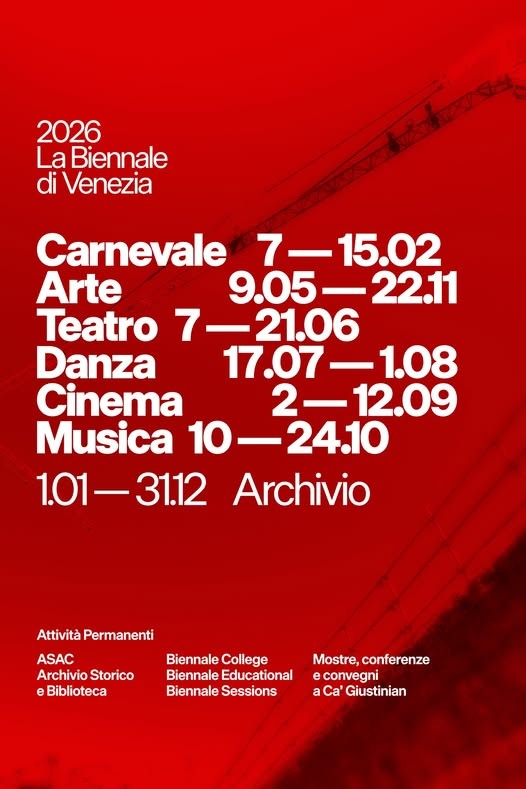
Критик Eddy Frankel у The Guardian пише, що Бієнале 2026 року здавалася майже розірваною ще до відкриття: її супроводжували протести, відставки, скасування, втрата фінансування й смерть кураторки Koyo Kouoh, яка не змогла завершити реалізацію власної концепції. У його оцінці тема тиші, відпочинку й зцілення, закладена в In Minor Keys, вступила в різкий дисонанс із реальністю воєн, екологічної кризи та політичної радикалізації.
Associated Press у матеріалі Colleen Barry назвала 61-шу Бієнале найхаотичнішою в її сучасній історії. Це визначення добре передає масштаб кризи: суперечка вийшла за межі внутрішньої мистецької процедури і стала питанням довіри до інституції, її етичної позиції та здатності діяти прозоро в умовах війни й політичного тиску.
Отже, нинішній конфлікт на Венеційській бієнале — це не просто скандал навколо премії. Це зіткнення трьох принципів: автономії мистецтва, політичної відповідальності та інституційної легітимності. Організатори захищають відкритість і рівне ставлення до всіх учасників. Художники, які відмовляються від участі в голосуванні, наполягають, що нейтралітет у ситуації воєн і звинувачень у злочинах проти людяності може виглядати як нормалізація. Саме тому Венеційська бієнале 2026 року може увійти в історію не лише як виставка, а як момент, коли сама модель глобального мистецького представництва опинилася під публічним судом.
More than 100 Venice Biennale artists threaten legal action over new awards system
One of the sharpest conflicts in the recent history of the Venice Biennale has unfolded at its 61st edition. More than 100 artists, represented in the central exhibition In Minor Keys and in national pavilions, have threatened legal action against the organisers. The dispute centres on the artists’ claim that their names remained in the voting process for the new Visitors’ Lions awards despite repeated requests to be removed from the ballot.
The case was reported by James Imam in The Art Newspaper. According to the publication, the group of artists said the situation showed disrespect not only towards the participating artists themselves but also towards the public, who were being asked to vote in a process that, in the signatories’ view, lacked sufficient transparency and accountability. The Biennale has disputed that account. In its response, the institution said the names would remain listed in order to guarantee visitors’ freedom of expression, while votes cast for artists who had requested withdrawal would not be counted.
The dispute is part of a wider crisis that began even before the exhibition officially opened. The international jury, which had been due to award the traditional prizes, resigned following controversy over the participation of Russia and Israel. The jury had previously said it would not consider for awards works from countries whose leaders were subject to proceedings or arrest warrants at the International Criminal Court in connection with the wars in Ukraine and Gaza. In practical terms, the decision was understood to apply to Russia and Israel.
After the jury’s resignation, La Biennale di Venezia announced the creation of two Visitors’ Lions. The winners, in two categories — best participant in the central exhibition and best national participation — are to be chosen by visitors who have attended both the Giardini and the Arsenale. Voting remains open throughout the Biennale, with the results due to be announced on 22 November, the final day of the exhibition.
That decision became a new point of tension. Artists who supported the jury’s resignation said they did not want to be part of a mechanism which, in their view, replaces professional judgement with a public vote and effectively returns all national pavilions to the competition, including those at the centre of the political crisis. The organisers, for their part, have insisted on the openness of the process and on visitors’ right to express their own view.
The precedent lies not only in the threat of legal action. The Venice Biennale has long been a stage for political protest, but the current situation brings together several layers of crisis at once: the resignation of the entire jury, the replacement of the traditional expert-led awards process with a public vote, the mass refusal of artists to take part in the awards, and a legal dispute over the institution’s right to keep participants’ names in the voting system.
Political crises have occurred in the Biennale’s history before, although not in quite this configuration. In 1968, Venice became a site of student protest against the elitism and commercialisation of the art system. In 1974, the Biennale effectively turned into a political platform of solidarity with Chile after Augusto Pinochet’s coup. In 1977, the exhibition known as the Biennale of Dissent focused on cultural dissidence in the Soviet bloc. After Russia’s full-scale invasion of Ukraine, the Russian pavilion did not operate in 2022 or 2024, and its return in 2026 became one of the main sources of tension at this year’s Biennale. In 2024, the Israeli pavilion was also at the centre of a political crisis, when artist Ruth Patir and the curators refused to open the exhibition until a ceasefire in Gaza and the release of hostages had been agreed.
European cultural commentators have interpreted the current conflict as a symptom of an older structural problem at the Venice Biennale: its reliance on the system of national pavilions. The British writer Matthew Holman, writing in Frieze, argues that artworks in Venice are rarely viewed separately from the states that present them. In his reading, the pavilion system makes the Biennale especially vulnerable to war, crises of legitimacy and diplomatic conflict.
The French critic Roxana Azimi, writing in Le Monde, describes this year’s Biennale through the prism of “pariah pavilions” — Russia, Israel and the United States. She notes that the artists involved in those pavilions have tried to distance themselves from state policy, but that the very structure of national representation continually pulls them back into a political context.
In The Guardian, critic Eddy Frankel writes that the 2026 Biennale seemed almost fractured before it had even opened: it was accompanied by protests, resignations, cancellations, the loss of funding and the death of curator Koyo Kouoh, who was unable to complete the realisation of her own concept. In his assessment, the theme of silence, rest and healing embedded in In Minor Keys sat in sharp tension with the realities of war, ecological crisis and political radicalisation.
Associated Press, in its coverage by Colleen Barry, described the 61st Biennale as opening amid exceptional turmoil and geopolitical controversy. That assessment captures the scale of the crisis: the dispute has moved beyond an internal artistic procedure and become a question of trust in the institution, its ethical position and its ability to act transparently under conditions of war and political pressure.
The current conflict at the Venice Biennale, then, is not merely a dispute over an award. It is a clash between three principles: artistic autonomy, political responsibility and institutional legitimacy. The organisers defend openness and equal treatment for all participants. The artists who refuse to take part in the vote argue that neutrality, in a context of war and allegations of crimes against humanity, can look like normalisation. For that reason, the 2026 Venice Biennale may be remembered not only as an exhibition, but as a moment when the very model of global artistic representation came under public scrutiny.
2167