© Mathematical Society
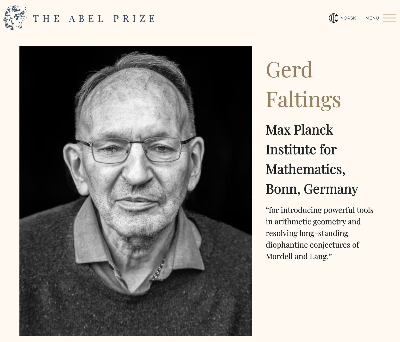
Німецький математик Герд Фалтінгс, дослідник Інституту математики Макса Планка в Бонні, отримав Абелівську премію 2026 року — одну з найпрестижніших міжнародних нагород у галузі математики. Про рішення оголосила Норвезька академія наук і літератури 19 березня. Відзнака присуджується за видатні досягнення, що визначають розвиток математичної науки.
Фалтінгс здобув світове визнання завдяки фундаментальним результатам в арифметичній геометрії — галузі, що поєднує алгебру, геометрію та теорію чисел. Його праці допомогли розв’язати давні математичні проблеми, зокрема гіпотезу Морделла, яка стосується кількості раціональних точок на певних алгебраїчних кривих. У 1986 році за це досягнення математик отримав медаль Філдса.

Пам'ятник Нільсу Генріку Абелю в Осло, 1908
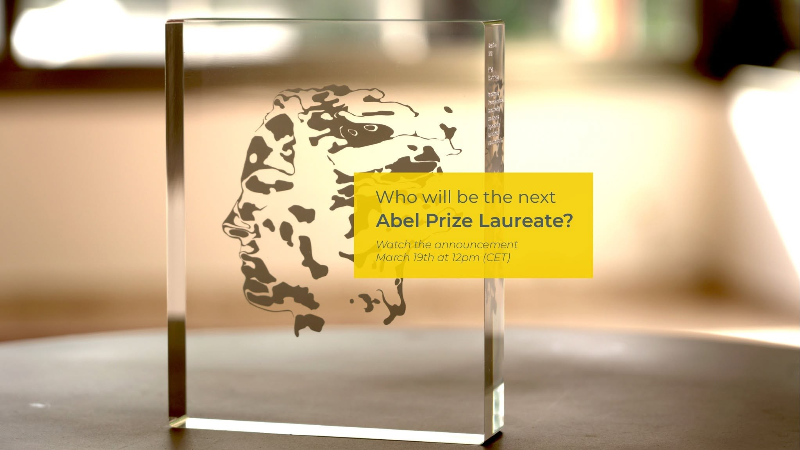
Абелівська премія, названа на честь норвезького математика Нільса Генріка Абеля, відзначає дослідження, що мають визначальне значення для розвитку математики. Її часто називають математичним аналогом Нобелівської премії: на відміну від Філдсівської медалі, вона не має вікових обмежень і присуджується за видатний внесок у науку протягом кар’єри.
German Mathematician Gerd Faltings Wins 2026 Abel Prize
German mathematician Gerd Faltings, a researcher at the Max Planck Institute for Mathematics in Bonn, has been awarded the 2026 Abel Prize, one of the most prestigious international honours in mathematics. The Norwegian Academy of Science and Letters announced the award on 19 March. The prize recognises outstanding achievements that have shaped the development of mathematical research.
Faltings is internationally renowned for his groundbreaking work in arithmetic geometry, a field that brings together algebra, geometry and number theory. His research helped resolve longstanding mathematical problems, most notably the Mordell conjecture, which concerns the number of rational points on certain algebraic curves. He was awarded the Fields Medal in 1986 in recognition of this achievement.
Named after Norwegian mathematician Niels Henrik Abel, the Abel Prize honours research that has had a profound impact on the development of mathematics. Often described as the mathematical equivalent of the Nobel Prize, it differs from the Fields Medal in having no age limit and recognising outstanding contributions to the field over the course of a mathematician’s career.
9