© Nobel Prize
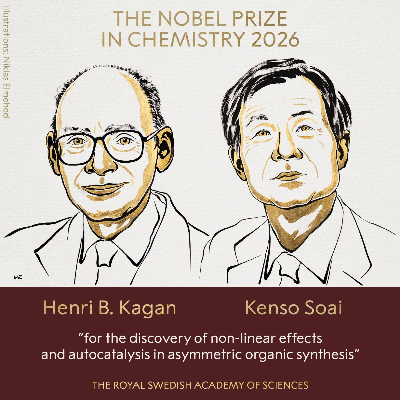
Нобелівську премію з хімії 2026 року присудили французькому хіміку Анрі Б. Кагану та японському науковцю Кенсо Соаї за дослідження нелінійних ефектів і асиметричного автокаталізу в органічному синтезі. Їхні роботи допомогли зрозуміти, як спрямовувати хімічні реакції так, щоб утворювалася переважно одна з двох дзеркальних форм молекули.
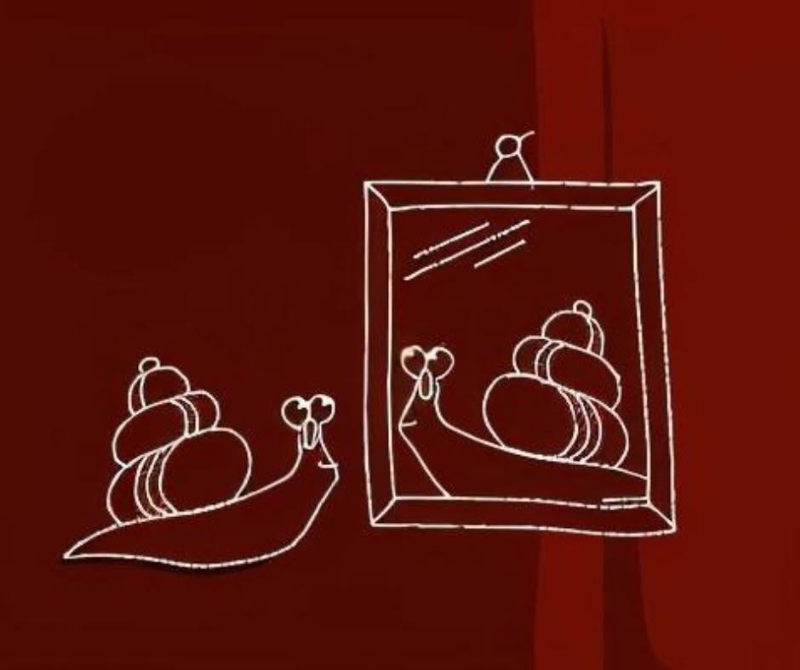
Ви чули про хіральність?
Як і людські руки, деякі молекули існують у двох дзеркальних формах, які неможливо сумістити. Цю властивість називають хіральністю. Попри однаковий хімічний склад, такі форми можуть по-різному взаємодіяти з організмом, що особливо важливо для розроблення ліків. Каган показав, як невелика перевага однієї форми каталізатора — речовини, що прискорює хімічну реакцію, — може посилюватися під час синтезу. Соаї дослідив асиметричний автокаталіз, за якого продукт реакції сприяє утворенню нових молекул тієї самої дзеркальної форми.
Ці відкриття допомагають хімікам точніше контролювати синтез лікарських речовин, а також досліджувати, чому в живій природі переважають певні форми молекул.
Як відреагували провідні хімічні товариства світу:
Роберт Мокая — президент Королівського хімічного товариства Великої Британії. У своїй реакції на присудження премії Мокая наголосив, що асиметричний органічний синтез демонструє, як фундаментальна хімія допомагає розв’язувати важливі глобальні проблеми. Він звернув увагу на те, що різні молекулярні форми можуть мати відмінні біологічні й фізичні властивості, а тому контроль над хіральністю має особливе значення для розроблення лікарських засобів. Окремо він відзначив внесок Кагана в розвиток цієї галузі. Джерело: Royal Society of Chemistry — офіційна реакція на Нобелівську премію з хімії 2026 року.
Рігоберто Ернандес — президент Американського хімічного товариства. Ернандес підкреслив значення досліджень Кагана й Соаї для контролю молекулярної «право-» та «лівобічності». За його оцінкою, ці роботи розширили можливості хіміків керувати асиметричним синтезом і створили нові перспективи для досліджень у фармацевтиці та матеріалознавстві. Джерело: American Chemical Society, заява президента товариства, опублікована на Newswise.
Такеюкі Судзукі — Університет Осаки, Японія. Коментуючи присудження премії, Судзукі наголосив на фундаментальному значенні асиметричного синтезу та досліджень хіральності. Він також звернув увагу на те, що Нобелівська премія втретє відзначає досягнення в суміжних напрямах цієї галузі після нагород 2001 та 2021 років. Джерело: SANKEN, Університет Осаки, коментар щодо Нобелівської премії з хімії від 8 жовтня 2026 року.
На сайті Нобелівського комітету для пояснення «хіральності» пропонують у неї зіграти: https://educationalgames.nobelprize.org/educational/chemistry/chiral/game
Nobel Prize in Chemistry: How Scientists Learned to Control “Mirror-Image” Molecules
The 2026 Nobel Prize in Chemistry was awarded to French chemist Henri B. Kagan and Japanese scientist Kenso Soai for their research into nonlinear effects and asymmetric autocatalysis in organic synthesis. Their work has helped scientists understand how to steer chemical reactions so that one of two mirror-image forms of a molecule is produced predominantly. Like human hands, some molecules exist in two mirror-image forms that cannot be superimposed on one another. This property is known as chirality. Although these forms have the same chemical composition, they can interact differently with the human body — a distinction that is particularly important in drug development. Kagan showed how a small excess of one form of a catalyst — a substance that speeds up a chemical reaction — can be amplified during synthesis. Soai investigated asymmetric autocatalysis, in which the product of a reaction promotes the formation of more molecules of the same mirror-image form. These discoveries enable chemists to exert more precise control over the synthesis of pharmaceutical compounds and help researchers investigate why one molecular form predominates in living organisms.
How Leading Chemical Societies Responded
Robert Mokaya — President of the Royal Society of Chemistry (UK). In his response to the award, Mokaya emphasised how asymmetric organic synthesis demonstrates the potential of fundamental chemistry to address major global challenges. He noted that different molecular forms can have distinct biological and physical properties, making control over chirality particularly important in drug development. He also highlighted Kagan’s contribution to the field. Source: Royal Society of Chemistry — official response to the 2026 Nobel Prize in Chemistry.
Rigoberto Hernandez — President of the American Chemical Society. Hernandez highlighted the significance of Kagan and Soai’s research in controlling molecular “handedness”. In his view, their work has expanded chemists’ ability to control asymmetric synthesis and opened up new avenues of research in pharmaceuticals and materials science. Source: American Chemical Society statement published on Newswise.
Takeyuki Suzuki — Osaka University, Japan. Commenting on the award, Suzuki emphasised the fundamental importance of asymmetric synthesis and research into chirality. He also noted that the Nobel Prize has recognised achievements in related areas of the field for the third time, following the awards in 2001 and 2021. Source: SANKEN, Osaka University — commentary on the 2026 Nobel Prize in Chemistry, published on 8 October 2026.
186