© theflorentine.net
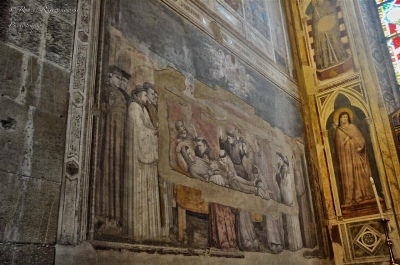
Після чотирьох років досліджень і реставраційних робіт у базиліці Санта-Кроче у Флоренції знову відкрили для відвідувачів капелу Барді з фресковим циклом Джотто «Історії святого Франциска». Роботи, розпочаті у червні 2022 року, завершилися у 2026-му — в рік 800-річчя смерті Франциска Ассізького. Фрески, створені Джотто та його майстернею на початку XIV століття, вважаються одним із ключових пам’ятників раннього італійського мистецтва та важливим етапом у формуванні нової європейської живописної мови.
theflorentine.net
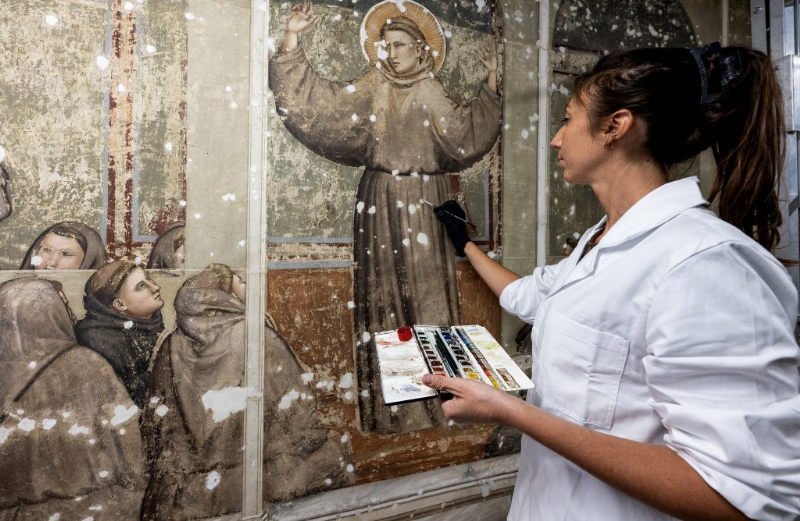
Реставрацію ініціювала Opera di Santa Croce, а проєкт розробив і реалізував Opificio delle Pietre Dure — один із провідних італійських центрів збереження культурної спадщини. До роботи були залучені фахівці різних галузей, дослідницькі центри та міжнародні експерти; науковий комітет об’єднав, зокрема, відомих дослідників Джотто й фахівців із реставрації. Проєкт підтримали Міністерство культури Італії, Fondazione CR Firenze, ARPAI та приватні донори з різних країн. Загальна вартість робіт становила близько €1,3 млн, з яких €700 тисяч забезпечили 250 приватних меценатів.
theflorentine.net
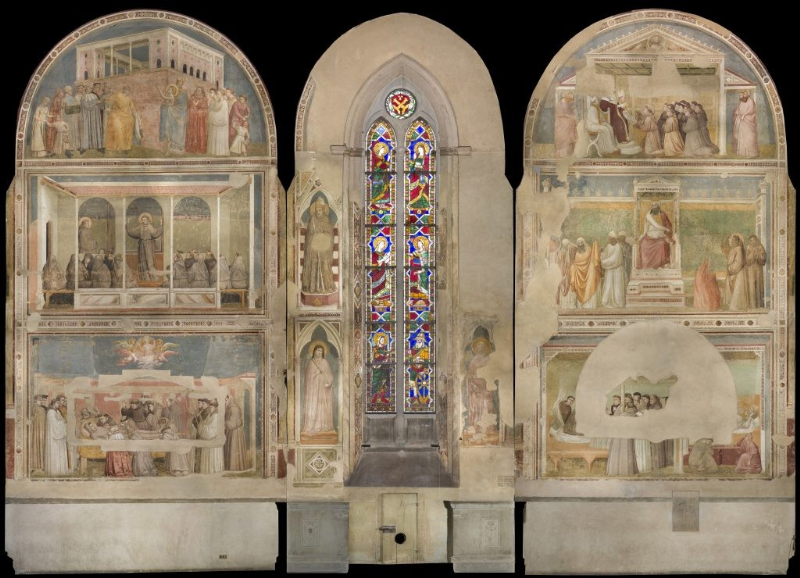
Стан фресок був складним. У XVIII столітті їх частково або повністю закривали шарами вапняного побілення, оскільки середньовічний живопис тоді вважався застарілим. У XIX столітті фрески відкрили знову, однак процес розчищення завдав їм додаткових пошкоджень. Наступні реставрації, зокрема у 1950-х роках, залишили на поверхні матеріали й втручання, які з часом ускладнили сприйняття оригінального живопису. Останній масштабний етап реставрації став особливо важливим через тріщини в стінах, відшарування живописного шару, розчинні солі та несумісні синтетичні заповнення, що залишилися після попередніх втручань. Особливість цього проєкту — поєднання традиційної реставрації з масштабною науковою діагностикою. Фахівці застосували термографію, георадарні дослідження, лазерне сканування та 3D-моделювання. Вперше всі видимі на поверхні фресок надрізи, підготовчі лінії та сліди, за допомогою яких Джотто конструював архітектурний простір своїх сцен, були нанесені на цифрову карту. Це дозволило буквально простежити процес проектування композицій художником.
santacroceopera.it
Особливо несподівані результати дала робота зі склепінням капели, яке під час попередніх реставрацій досліджували значно менше. Очищення, частково із застосуванням лазерної технології, відкрило деталі алегорій францисканських чеснот, зокрема Покори та Цнотливості, які раніше було важко прочитати.
Дослідникам вдалося краще побачити, як саме Джотто створював свій живописний простір: від підготовчих ліній і техніки нанесення фарби до взаємодії архітектури, жестів і поглядів персонажів. Саме тому завершення реставрації капели Барді у Флоренції стало подією не лише для музейної аудиторії, а й для історії дослідження європейського мистецтва.
In Florence, the Bardi Chapel Reopens After Major Restoration
After four years of research and conservation, Florence’s Basilica of Santa Croce has reopened the Bardi Chapel, home to Giotto’s fresco cycle The Stories of St Francis. Work began in June 2022 and was completed in 2026, the 800th anniversary of the death of St Francis of Assisi. Painted by Giotto and his workshop in the early 14th century, the frescoes are regarded as key monuments of early Italian art and an important milestone in the emergence of a new European pictorial language.
The restoration was initiated by the Opera di Santa Croce and designed and carried out by the Opificio delle Pietre Dure, one of Italy’s leading centres for the conservation of cultural heritage. Specialists from different fields, research institutions and international experts were involved, while the scientific committee brought together leading Giotto scholars and conservation specialists. The project was supported by Italy’s Ministry of Culture, Fondazione CR Firenze, ARPAI and private donors from several countries. The total cost was around €1.3 million, including €700,000 raised from 250 private patrons.
The condition of the frescoes was complex. In the 18th century, they were partly or entirely covered with layers of limewash, reflecting the period’s view of medieval painting as outdated. They were uncovered again in the 19th century, but the process caused further damage. Later interventions, including restoration campaigns in the 1950s, left materials and treatments on the surface that gradually obscured the original painting.
The latest major conservation campaign addressed cracks in the walls, flaking and detachment of the painted layers, soluble salts and incompatible synthetic fills left by earlier interventions. One of the project’s distinctive features was its combination of traditional conservation techniques with extensive scientific investigation. Specialists used thermography, ground-penetrating radar, laser scanning and 3D modelling.
For the first time, visible incisions, preparatory lines and other traces used by Giotto to construct the architectural space of his scenes were digitally mapped. The resulting map makes it possible to follow, almost step by step, how the artist planned his compositions.
Some of the most unexpected discoveries came from the chapel’s vault, which had received considerably less attention during earlier conservation campaigns. Cleaning, partly carried out with laser technology, revealed details of the allegories of Franciscan virtues, including Obedience and Chastity, which had previously been difficult to read.
The restoration has also given researchers a clearer understanding of how Giotto constructed pictorial space — from preparatory drawing and the application of paint to the interaction of architecture, gesture and gaze.
The reopening of the Bardi Chapel is therefore significant not only for visitors to Santa Croce, but also for the study of European art history, offering a rare opportunity to examine more closely how one of the most influential painters of the early Renaissance developed his visual language.
97